











| Quick | ||||||
![]() |
||||||
![]() |
||||||
| Recent | ||||||
![]() |
||||||
|
||||||
![]() |
||||||
|
Patriot Games Updates Patriot Basketball Update January 26- Half Day –No Practices January 27- Zumba Dance!! & Gr. 7 Girls at OLPH Tournament January 31- Gr. 5 Boys vs St. Helen’s (Home) February 1- Gr. 7 Boys @ St. Helen’s (Away) February 2- Gr. 7 Girls @ St. Helen’s (Away) On January 24 our Grade 5 boys had an excellent exhibition game against the Saints of St. Mary. The game was one-sided as our boys scored 32 points, while only giving up 11. The Patriots played a well balanced game as everyone was involved and played a tremendous game. Every player was strong in their positioning on the court which lead to their high score and tough defense. Let’s hope they continue to play inspired basketball and remain undefeated.
Speech Arts The purpose of the Speech Arts Festival is to give students an opportunity to develop public speaking skills, exposure to the rich tradition of poetry in the English language and to better meet our curriculum goals in Language Arts. Each class from Grades K—7 will be preparing a poem for group presentation. There are also opportunities for individual presentations. The categories for Primary students (grade K – 3) are: Poetry Recitation, Prepared Bible Reading and Storytelling. The categories for Intermediate students are: Poetry Recitation, Prepared Bible Reading and Persuasive Speech. All students from Grades 3—7 will be required to choose and present a poem for the individual category. All students from Grades 1—7 are invited to compete in any individual category they wish, however, it would fall on the student with parent help at home to prepare for this. Each class will have a mini festival sometime before the end of February where up to 3 students in each category will be chosen to take part in the School Festival on February 27 and 29.The students will benefit greatly from this opportunity and we are very much looking forward to hearing their presentations. The Importance of Poetry It is a temptation for teachers to save fine arts appreciation for days when religion, English, mathematics, science, history, geography, literature, and penmanship are all finished. The problem, of course, is that all of these things seldom get done. Therefore the introduction of beautiful pictures, great music, and excellent poetry remains an activity to do "someday". This is a mistake, because the appreciation of fine arts is formative for the soul. The old adage "You are what you eat" could be changed truthfully to say "You are what you see and hear." The models in one's imagination and memory become a part of the soul and affect all the rest of life. If the soul holds good, true, beautiful, noble, and heroic images, it will be inclined to love those things. Additionally, since whatever is true is also beautiful, an appreciation of the beautiful prepares the way for an appreciation of the true. If children love the beautiful they will be disposed to love the truth, as truth, when they are older. Thus, even in terms of intellectual formation, fostering the fine arts is important. Socrates, in The Republic, says it pretty clearly:
We should foster in our children a love of the beautiful and true and a corresponding distaste for what is ugly and false. Children's sense of beauty can be encouraged in various ways; teachers may include beautiful art, music, and literature regularly in their curricula, in ways that are appropriate to the various stages of the intellectual formation of the child. Attention to such things will aid in the kind of intellectual formation that is the object of a good education because it will strengthen and inform the imagination, which must be developed in the right way to do its job well. Poetry is one of the forms of the beautiful that is relatively accessible to children. Children respond to patterns of sound and enjoy the rhythm of poetry, if they are introduced to it before someone tells them they shouldn't like it. Poetry is naturally pleasant to the ordinary child, and pleasure is a sign teachers and parents should never ignore. Children are very good at imitation because it is the way God intends them to learn. We need to keep this in mind for all areas of our children's development, moral and intellectual. Children need models of right behavior and of excellence in all the scholastic areas that are appropriate for them to pursue. The right use and richness of language is an area that is most appropriate for the formation of children. For this reason they should be exposed to the best examples of the use of language that we can give them. Beautiful word patterns and sounds, the right choice of words, and methods of producing particular responses can be imitated by children who have had good models. Language development is significantly enriched by exposure to good poetry. Additionally, in all of the fine arts, one of the chief benefits of appreciation is seeing the world through the eyes of the artist. His gift of observation is given to the student when the work is studied. It is as though the artist said, "Look, here is something really beautiful that I saw and want to share. Perhaps you missed it." For this reason a painting can be better than a photograph in drawing the viewer's attention to certain aspects of a particular scene, for example, the lighting or the composition of the figures. Similarly, poetry can be a better way to draw attention to certain truths or make some facet of an experience stand out. Excellent poetry will both direct the student's attention to these aspects of reality and model the best way to share that experience. Also, poetry appeals to the emotions, as does music, and, like music, beautiful and rightly ordered poetry can habituate or train the soul to the right kind of internal movement. Familiarity with truly good poetry will encourage children to love the good, to hope for its victory, and to feel sad at its demise. The opposite habituation is very clear to see in children who watch or read stories in which the grotesque is taken for granted. They cease to be shocked by what is really disgusting. That is a great loss to the soul. In addition to these reasons, which are true for all age levels, there are other, more specific, developmental considerations: In the earliest years, the object of our curricula should be twofold. We need to teach basic reading, writing, and arithmetic, and we should encourage memory and observation. The basic skills are the tools of all further learning; memorization and observation are what children do naturally at this stage of development. It is through the use of natural inclinations that the intelligence is formed at every stage of development. When babies are ready to crawl, you encourage and help them do just what they want to do. You put attractive objects where they can see them, so they will practice crawling. You don't put the toy too far out of reach, because that would be discouraging for the child. You don't put it too close, because that wouldn't provide enough practice. Instead, you make a judgment about just the right distance and make adjustments as the baby's ability grows. Teaching children is like that. Little children are good at memorization; they pick up jumping-rope rhymes and doggerel verses without effort. Encourage this inclination and ability by having the children memorize fine poetry, among other things. This will strengthen the imagination and memory, as well as prepare the children for the subsequent stages of intellectual development. Since poetry draws attention to specific aspects of experience, regular exposure to poetry will reinforce children's observational powers. In the middle years, seventh through ninth grade, children are ready to analyze. Summaries, grammatical exercises, both in Latin and English, and various categorization activities will encourage and improve analytic ability, as will the close examination of well-reasoned arguments. With respect to poetry, the student at this level should try to turn poetry into prose. This exercise in simple analysis also begins to focus the mind on what is specific to poetry that differentiates it from other forms of speech. The teacher should lay this question before the child and not give him the answer too soon. Let him learn inductively, through many examples. This is how the mind is trained to think. If the answer is given too quickly, the student exercises his memory but not his intelligence. Left to himself, he will eventually come to see that poetry is not primarily intended to impart information, but to evoke a particular emotional response. The student who has come to see this about poetry on his own, through directed exploration, will have a much fuller and richer appreciation of the fact than one who has simply been told that this is so. Though poetry is not intended primarily to impart information or to make an intellectual argument, there is a quasi- argument in the poem nonetheless. The poet moves the mind of the reader from ignorance to knowledge. The student's attention should be directed to trying to find and articulate that movement. Further, continued practice in memorization will stretch the faculty of imagination. Like any power of the soul, repeated use of the power will improve it. Children who memorize regularly find it easy to do, and a good memory is a real asset to the intellectual life. In the upper grades, tenth to twelfth, students should concentrate on learning how to present the logical arguments they are now able to make. They need to learn rhetorical patterns, and imitation remains an excellent way to learn. But there should also be a study of the method employed by others. Ask how an author achieves the effects he achieves, and have the students study those techniques in detail. This is a good example of a general principle in education. First supply experience of the various types of whatever you are studying, exposing the children to many instances of the category. Then when they are ready, turn to a detailed study, which will be much more effective, and easier, because of the early exposure. This is not necessary to a good understanding, but it makes it significantly easier to acquire that understanding. Teaching Latin in high school to someone who has already memorized vocabulary and paradigms and is familiar with grammar is a breeze compared to teaching it to a student who has never done any Latin or whose grammatical knowledge is shaky. The same thing is true about teaching philosophy to students who have a wide acquaintance with history and literature. They are properly prepared to undertake the more difficult study, having experiences that give a content to the philosophical ideas which are now introduced. In the study of poetry, the high school years are the right time to bring up basic poetical information, such as figures of speech, meter and rhyme scheme, and the classes of poems. Familiarity with many poems makes this an easier study, though one may undertake it without the earlier preparation. I have included, in the ending sections of this book, poems of increasing difficulty, with information on terms and concepts to know in the study of poetry, as well as study questions and answers. How to Use This Book Poetry. In the early years, have the children work on memorizing a number of poems each year. Poetry is more easily memorized when it is heard, so start by reading the poem to your child. Then work on one or two stanzas per week. On the first day introduce the poem, reading it and talking about it. On the second day spend five minutes going over the first stanza with the child, having him repeat the lines as they are read to him. On the following two days repeat this procedure, and on the fifth day have the student recite the first stanza. In the next week start studying the second stanza, reading the lines to your child and having him repeat them. Also review the first stanza. This should not take more than five minutes per day. Again, on the last day have the child recite the stanzas he now knows. Continue this process until the poem is learned. Thus a four-stanza poem will take four weeks to learn, or two weeks if the student learns two stanzas per week. Children can learn poetry more quickly than this, but it tends not to stay with them if they learn it too rapidly. Once the poem is learned, enter it in a "Poetry Notebook". This can be a plain-paper or lined notebook. Write the poem down and invite the child to illustrate it. (As he gets older, he can do the writing.) Do this with each poem as it is mastered, and eventually the student will have his own personal anthology, full of poetry he knows and enjoys. In the analytic period, have the children continue to memorize poems and add to their "anthology", but also use the poems as matter for analysis. When a new poem is introduced, have the child turn it into prose. Ask him which he likes better, his retelling of the information of the poem or the poem itself. Do they produce the same effect? Let him try to express the movement from ignorance to knowledge in the poem. Ask him, "What does the poet lead you to see? How do you respond to that?" In the high school years a study of the power and beauty of language and the uses to which it can be put should be central to the curriculum. This book is intended to aid the teacher in reaching that end. There are numerous poetry selections included that are appropriate for high school students, as well as study questions that can be used to help students investigate the various ways in which poetry achieves its effects. The poetry for the rhetorical stage, usually tenth through twelfth grade, is divided into three sections, each section containing more than enough poems for a poetry unit per year. The number of poems included is deliberately greater than necessary so that the student may choose among them for the poems that appeal to him. The first section concentrates on the figures of speech used in poetry. The terms used in such a study, and their meanings, are given at the beginning of the section, and then poems are presented that illustrate these figures, along with study questions about the material. The second section turns the student's attention to the types of meter used in poetry, while still incorporating the information on figures of speech. Again, there are study questions to go with each poem. The third section consists of a presentation of the various types of poetry, with some of their distinguishing characteristics. Study questions are included. All three sections constitute only a beginning of the study of poetry, but they will set the high school student on the road to an intelligent, informed appreciation of poetry, encourage thinking skills, and point out various, effective ways in which language can be used. There are answers included for all the study questions, but I suggest that you use them sparingly. They might be helpful when a question is unclear, because then the answer may illuminate the point of the question. In general, however, it is better to ignore the answers given, which are, after all, only one interpretation, and let the student exercise his mind looking for the answers himself. If you give him the answers, he will exercise his memory, but not his mind, as mentioned above. It is better to let the child struggle with something, reflect on it, and come back to it later, than it is to give him the answer. Dictation At the end of the earlier sections of poetry in this book, you will find a number of prose selections. These selections are included for those who want to incorporate dictation exercises in their curriculum but don't want to use the available full programs that have such activities. Studied dictation is a useful tool in the development of children's writing ability. First, the children are working from models of good writing. They see and study correct usage, punctuation, and spelling, as well as excellent writing of various styles. In the old days of Catholic education, schools were financially poorer, but they turned out excellent scholars, as well as faithful Catholics. One reason for this was that neither the children nor the schools could afford books, so lessons were copied and then worked on. This meant that the children were continuously exposed to models of correctly written material. This is another example of the truth that children learn by imitation. In a studied dictation, the teacher goes through the passage with the child, line by line, noting and giving a reason for every capital, comma, semicolon, colon, period, question mark, exclamation mark, and quotation mark. Difficult spellings are gone over as well. The teacher then dictates the passage to the child, who writes it from the dictation. This way the student gives concentrated attention to the mechanics of writing in a situation where he is writing material that has been put together because it goes together, as opposed to material artificially put together to try to highlight examples of writing mechanics. In an unstudied dictation, the teacher reads a passage that the child has not yet seen. The student writes the passage down as best he can from simply hearing it. This is an excellent opportunity to put together all the various spelling and mechanics rules he has learned. He has to concentrate his attention on what he hears and think about how it should be written. Such an exercise reveals whether the student has mastery in these areas or not. It is a much better indication of spelling proficiency than a weekly spelling test. All that is required for that is a good short-term memory. Whether studied or unstudied, the method of doing the dictation is the same. First, read the selection at a normal speed. Then, say the first five or so words of the initial sentence and have the child repeat those words and write them without saying anything else. My children often want to offer a comment at this point, but I have found that, if they do, they lose their focus and can't remember what they're supposed to be writing. The dictation takes twice as long that way and is not as effective. As soon as the student finishes the first set of words, read the rest of the sentence, have him repeat it and write it, and then move on to the next set of words. The dictation doesn't take long this way, but it does provide a model of good writing and practice in spelling and punctuation. Further, over the years the student becomes familiar with many styles of writing and is prepared to think about the differences in technique between such writers as Jane Austen and Charles Dickens. Poetry is important in the intellectual development of children, and it is a pleasure as well; these are not unrelated phenomena. It is my hope that this book will be of use to Catholic teachers as they raise their students to be faithful, informed, intelligent people who will put their talents to use in the service of God. |
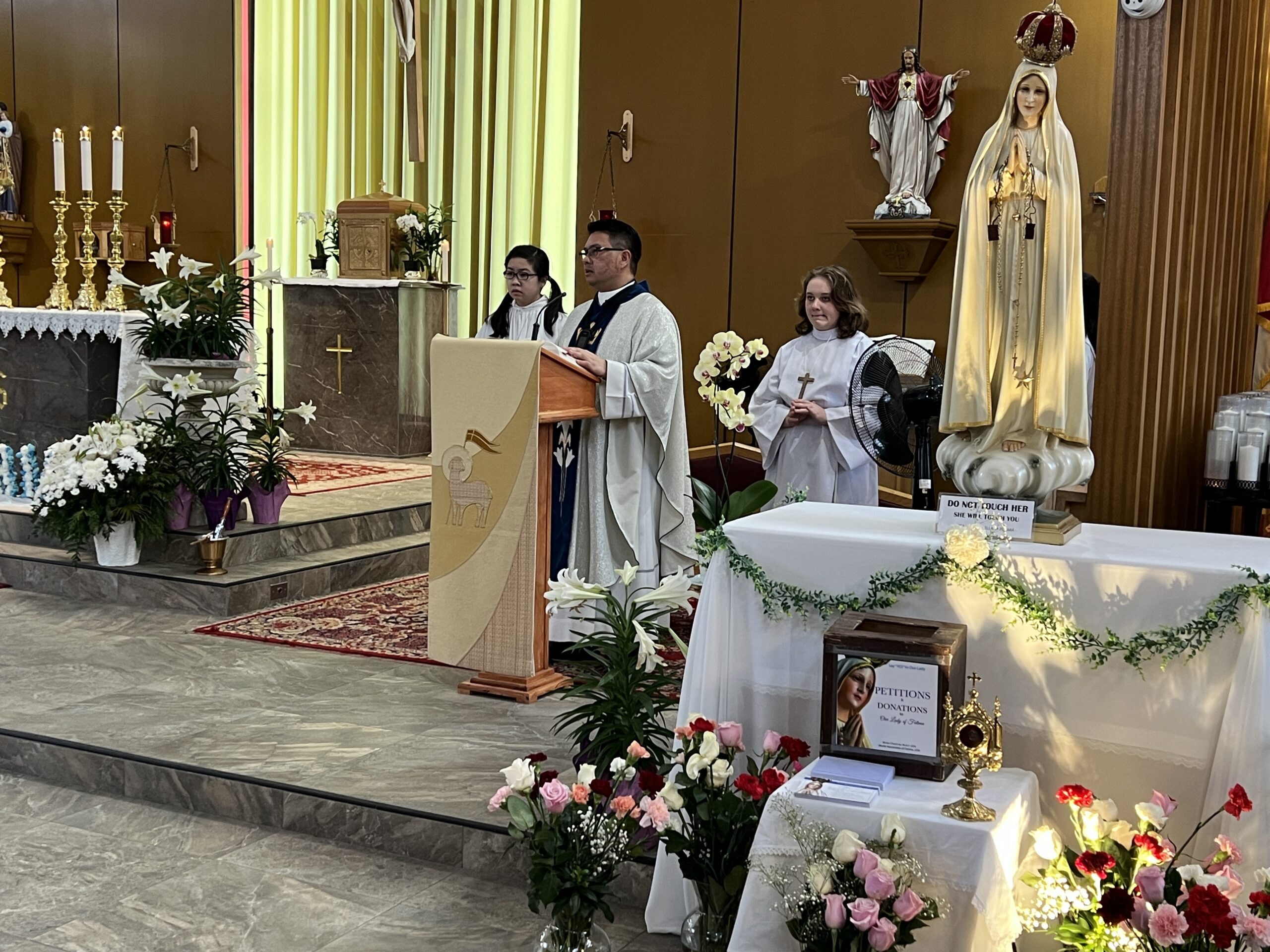
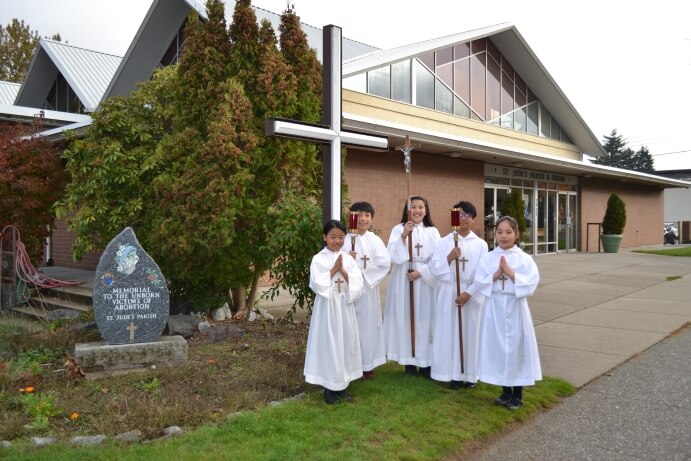
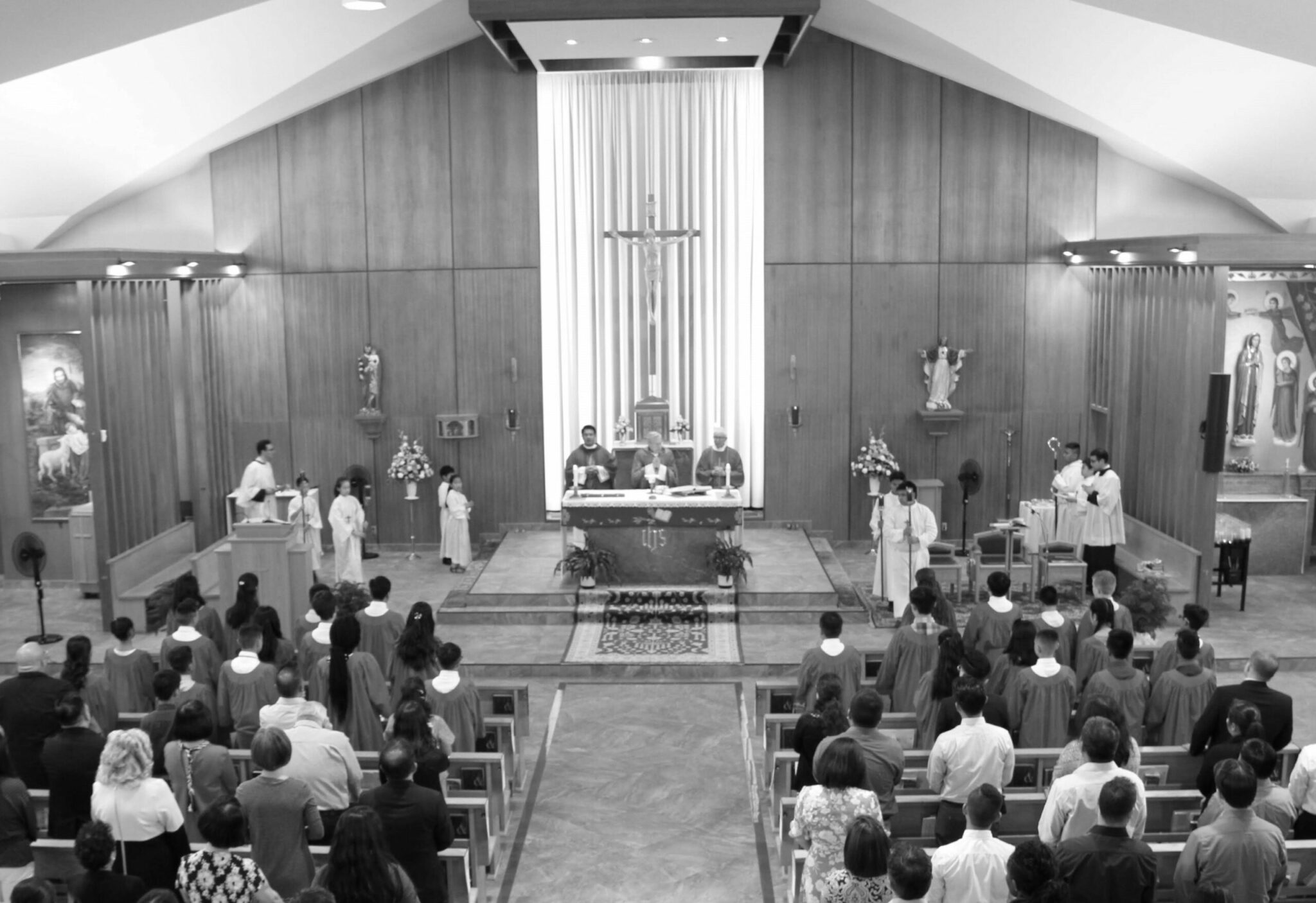
February 2 is the Feast of the Presentation of the Lord. This Feast is also known as Candlemas because of the custom of blessing candles. You are invited to bring your candles on this day to be blessed before Mass. The School Mass will begin at 11:00 am.
If you have a child who will be turning 5 in 2012 and entering Kindergarten, please notify the school office and we’ll put your child’s name on the list for 2012. January 26, Thu @12 noon Early Dismissal
January 27, Fri Colour day February 2, Thu@ 9:30am School Mass February 10, Fri Open House beginning at 1:00pm February 16 & 17,Thu & Fri Catholic Educator’s Conference (No School)
Nova Food Hot Lunch Days; Feb 1st, 8th, 15th, 22nd and 29th. Please visit www.novafood.ca to place your meal order. You can pre-order all of the hot lunch days and make any changes up to 8:00am the day of the hot lunch. |